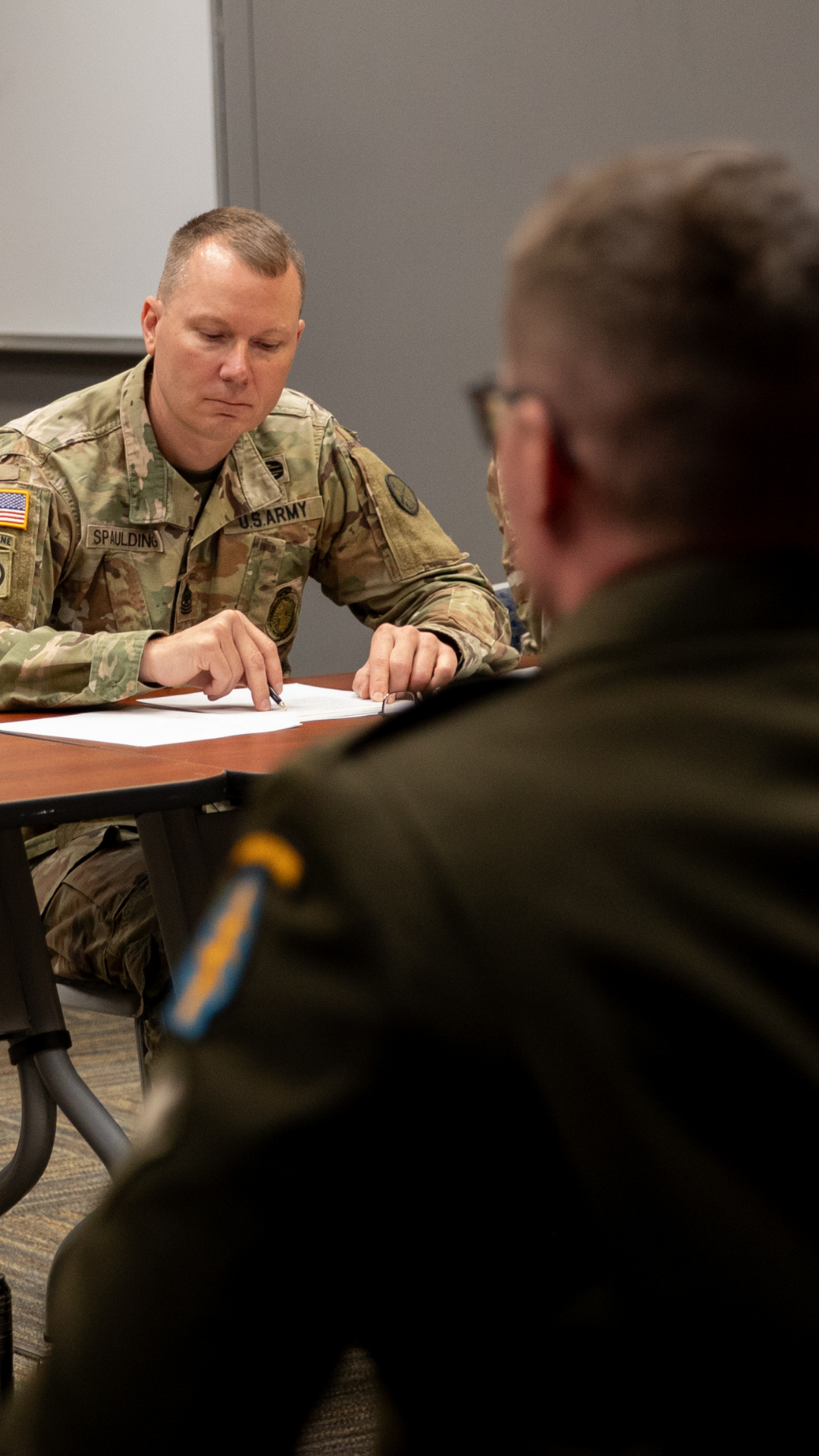
For every 1 servicemember discharged by court-martial, more than 100 are administratively separated.  Legal offices and military defense counsel often treat these actions as second tier matters.  We know better.  At Mangan Law, we treat each administrative separation board with the same intensity as a court-martial because we know the stakes are just as high.  While these boards are technically “non-criminal” administrative events, the reality is that a negative outcome—especially an Other Than Honorable (OTH) discharge—is a life-altering impact that can strip you of your GI Bill, VA healthcare, and future employment opportunities. We have successfully defended enlisted members from every branch, securing retention and protecting the benefits they earned through years of sacrifice.

The Administrative Separation Process: A Career in the Balance

The military uses administrative separation (ADSEP) as a way to “fire” service members without the legal complexity of a court-martial. Commands often prefer this route because the burden of proof is much lower than in a criminal trial.

  • The Notification: You will receive a formal memorandum stating that your command is initiating separation. This document will list the “Basis for Separation,” such as misconduct, drug abuse, or “serious offense”.
  • The Decision Point: Depending on your time in service and the characterization the command is seeking, you will either have the right to a formal board hearing or only the right to submit a written rebuttal.
  • The Board Hearing: If you are entitled to a board, a panel of three senior service members will hear evidence, listen to witnesses, and decide your fate.

What Is at Risk? Understanding Discharge Characterizations

The “characterization” of your service is the most important factor in your post-military life.

  • Honorable: You retain all veteran benefits, including the GI Bill and VA home loans.
  • General (Under Honorable Conditions): You generally retain VA medical benefits but lose the GI Bill.
  • Other Than Honorable (OTH): This is the most severe administrative discharge. It typically results in the loss of almost all VA benefits and can be a significant barrier to civilian employment.

Why the “Preponderance of the Evidence” Standard Matters

In a court-martial, the government must prove guilt “beyond a reasonable doubt”. At a separation board, they only need to meet the “Preponderance of the Evidence” standard.

  • The 51% Rule: The board only needs to believe it is “more likely than not” that you committed the alleged misconduct.
  • The Danger: Because the bar is so low, commanders often use boards to push out service members based on weak or hearsay evidence that would never hold up in a real court.

Strategic Defense: How We Fight for Retention

We don’t just “show up” to a board; we litigate it. Our defense strategy focuses on:

  • Challenging the Basis: We scrutinize the government’s evidence to prove that the alleged misconduct never happened or was exaggerated.
  • Mitigation and Extenuation: We present evidence of your “Total Service,” including awards, positive evaluations, and deployments, to prove that you are still a valuable asset to the military.
  • Medical Advocacy: We frequently identify undiagnosed PTSD, TBI, or other service-connected conditions that explain or mitigate the conduct in question, triggering “Liberal Consideration” protections.

Why Mangan Law for Your Separation Board?

Detailed military counsel (JAG) are often dedicated, but they frequently manage dozens of boards at once and may lack the high-level trial experience needed for complex cases. Sean Mangan brings over 30 years of experience, including time as a Military Judge, to your defense. We provide the aggressive, independent advocacy required to force the board to see you as a person, not just a file.

Frequently Asked Questions

  • What is an Enlisted Administrative Separation Board? An Administrative Separation Board is a formal hearing where a panel of senior service members determines if you should be discharged from the military before your enlistment ends. Unlike a court-martial, it is an administrative process, but it carries the power to strip you of your veteran status and benefits.
  • When am I entitled to a formal board hearing? Generally, you are entitled to a board if the command is recommending an Other Than Honorable (OTH) discharge characterization or if you have a certain amount of time in service (typically six or more years). If the command is seeking an Honorable or General discharge for a member with less than six years, you may only have the right to submit a written rebuttal.
  • What is the “Preponderance of the Evidence” standard? At a separation board, the government does not have to prove you are guilty “beyond a reasonable doubt”. They only need to show that it is “more likely than not” (50.1% certainty) that the allegations against you are true. Because this burden is so low, having a skilled defense attorney to challenge the reliability of the government’s evidence is critical.
  • Can a board keep me in the military even if I committed misconduct? Yes. A separation board has the power to recommend retention even if they find that you committed the alleged misconduct. This often happens when the defense successfully demonstrates your overall value to the service and proves that the incident was an isolated lapse in an otherwise exemplary career.
  • If I am separated, can the board decide my discharge characterization? Yes. The board makes a specific recommendation on whether your service should be characterized as Honorable, General (Under Honorable Conditions), or Other Than Honorable (OTH). An OTH discharge can result in the loss of almost all VA benefits, including the GI Bill.

We Serve Where You Serve

Joint Base Lewis-McChord | Joint Base Elmendorf-Richardson | Fort Wainwright | Naval Base Kitsap | Joint Base San-Antonio | Fairchild AFB | Mountain Home AFB | Malmstrom AFB | USCG Kodiak | Fort Huachuca | Fort Irwin | Ellsworth AFB | FE Warren AFB | Fort Leavenworth | Fort Johnson | Fort Eisenhower | Hill AFB | Beale AFB | Minot AFB | Grand Forks AFB | Fort Liberty | Fort Cavazos | Fort Riley | Fort Stewart | Fort Moore | USCG Sector Puget Sound | Fort Carson, Peterson SFB, Air Force Academy | Wright-Patterson AFB | Military District of Washington